Post-Fire Flooding and Water Infrastructure | Ber Wilson
After the Cottonwood Fire, floods hit Beaver’s roads and water system. Ber Wilson explains why recovery money arrives late and what towns should check now.
| By Ericson Tua'one
- Water
- Infrastructure
Author: Ericson Tua’one August 12, 2026 | Water, Infrastructure
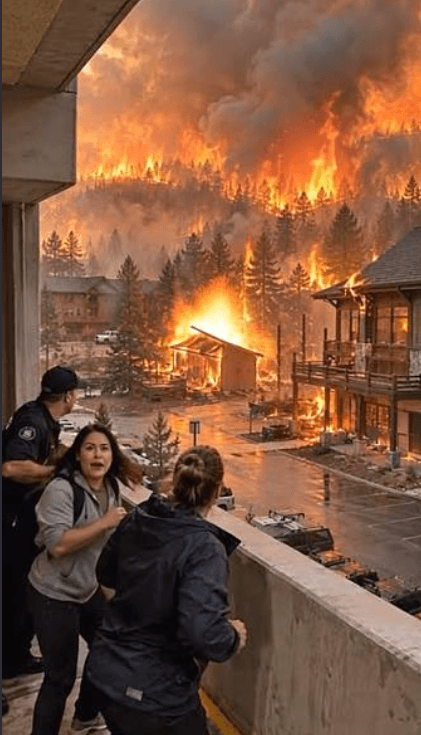
On Sunday, July 19, a fast, heavy storm hit the Cottonwood Fire burn scar above Beaver.
KSL meteorologist Matt Johnson reported 1.59 inches of rain within 45 minutes near Eagle Point Resort, in the middle of the burn scar. The burned slopes could not hold it. Water and debris surged into the Beaver River, topped a diversion dam in Beaver Canyon and kept moving toward town.
Mayor Matt Robinson watched part of it on a camera feed from the Tushar Mountains. “I tuned in to the camera that was furthest up the canyon and watched a 15- or 20-foot concrete structure get overtaken and wiped out,” he told the Deseret News.
Some residents were rescued from rooftops. A section of Interstate 15 closed for hours. The flood washed out part of one neighborhood’s culinary water system, and the city told residents not to drink the tap water.
The fire was still not fully contained. The water had already arrived.
In my July 1 post, I wrote about the power shutoffs that came ahead of this fire season. This post is about what came after the smoke.
The warning came first
This flood did not arrive without warning.
Federal flood guidance has said for years that wildfires raise flood risk for years afterward. Burned ground sheds water instead of absorbing it. Utah State University Extension notes that the elevated risk can last up to five years, until vegetation is restored.
On July 14, Forest Service Burned Area Emergency Response teams began evaluating soil burn severity on the Cottonwood Fire. Those teams map erosion and debris-flow risk to national forest lands and share their reports with the counties that work with downstream landowners.
Beaver prepared, too. The city spent more than three weeks urging residents to stock drinking water. The state placed sandbags and staged heavy equipment to clear debris. On July 15, the county and city announced two live cameras watching the Beaver River.
When the storm hit, the National Weather Service gave about 90 minutes of warning before the flood wave reached town. It then upgraded the alert to a flash flood emergency, adding about 40 more minutes. It was only the second flash flood emergency the local office had ever issued.
County Commissioner Wade Hollingshead credited those efforts with the fact that no serious harm or loss of life occurred.
Governor Spencer Cox still put it plainly: “This was bigger than anybody anticipated.”
The preparation protected people. The infrastructure still took the hit.
Then came the bill
On Tuesday, July 21, the Beaver County Commission unanimously declared a state of emergency.
The Utah Department of Transportation closed State Route 153 through Beaver Canyon indefinitely. Between mileposts 7.5 and 10.5, multiple sections of road were destroyed. Near milepost 14, floodwater undercut the highway and washed away roughly half of the roadway.
The floods forced evacuations for about 200 homes and damaged roughly 80 houses, according to Utah News Dispatch. The fire itself burned more than 97,000 acres. A state and federal agreement now calls it the most destructive wildfire in Utah history.
On August 6, Governor Cox and Forest Service Chief Tom Schultz signed an $18.4 million recovery agreement at the Beaver County Courthouse. The Forest Service committed $9.2 million. Utah will match it from the state’s wildfire fund.
The money is meant to stabilize soils, restore access, and prevent erosion and sedimentation that threaten water quality and infrastructure.
It is needed. It also arrived 18 days after the flood.
Most of it is aimed at the burned landscape above town. Repairs to a city’s own pipes, intakes and treatment equipment usually depend on separate local, state and federal funding.
Why the money comes late
I do not fault anyone at that courthouse. By the standards of public funding, the agreement moved quickly.
The problem is structural. Recovery money responds to documented damage. Prevention money competes for attention before anything has broken.
Chief Schultz was candid about the limits. He told reporters that “we don’t have unlimited funding for post-fire recovery” and that emergency funding has to get on the ground within the first six months.
Governor Cox pointed to the federal system itself. “FEMA was more designed for hurricanes,” he said. “It really hasn’t been designed for these types of disasters.”
He also noted that some earlier forest thinning helped prevent even worse destruction. Preparation is not wasted when a storm still overwhelms it.
The economics favor acting early. The National Institute of Building Sciences found that federal mitigation grants save $6 for every $1 spent. That is a national average across hazards and programs, not a forecast for Beaver.
I will not claim that any particular project would have kept the water out of town on July 19. Some storms exceed reasonable preparation.
The pattern is still clear. A town can see the risk weeks ahead. The dollars to address it often come weeks after.
The camera that went dark
One detail from Beaver deserves attention from every utility below a burn scar.
During the July 19 flood, one of the new river cameras appeared offline. The second briefly showed a single frame timestamped 3:14 p.m., then went blank again, according to Stormwater Solutions.
I do not know why. That is not a criticism of Beaver County, which installed the cameras specifically to prepare.
It is the most practical lesson in this story. Warning equipment needs power, communications and placement that survive the event it is meant to watch.
The same is true for the water system itself.
A canyon intake has to survive ash and sediment. A pipe that follows the creek has to survive the creek. Pumps and telemetry need power when the lines are down. Repair crews need a road when the highway is gone. And after the flood, someone has to test the water before residents can drink it again.
Beaver officials hoped to lift the water order once testing confirmed the water was safe. That step depends on lab access, sampling crews and a route to get them there.
Each of those links can be checked on a calm day. Most are far cheaper to fix before the next storm than after it.
Five years is a planning window
The risk does not end when this monsoon season ends.
Burned watersheds stay dangerous until vegetation returns. That gives a town a defined window. Five years is long enough to plan, fund and build. It is short enough that waiting another budget cycle carries real cost.
Flood insurance has its own clock. Utah State University Extension notes a typical 30-day waiting period before coverage takes effect. Federal law allows an exception in certain cases where property is affected by flooding on federal land caused or worsened by post-wildfire conditions. Owners should ask their agent which rule applies before the next storm.
For water districts and utilities, the work has an order:
- Map every intake, well, pipeline, diversion, pump station and road downstream of the burn.
- Identify what fails first and what each failure shuts down.
- Decide what to protect, what to relocate and what to stock as spares.
- Make sure pumps, controls, cameras and radios have power and communications that survive an outage.
- Prepare funding applications while the risk is documented and fresh.
Six questions before the next storm
In June, I asked what a building really costs. In July, I asked what stays on when the power goes off and who pays for the power.
Water belongs in the same conversation. Before the next storm, I want six answers from every town below a burn scar:
- Which water sources, intakes and pipelines sit downstream of burned slopes?
- What happens to drinking water if the primary source is offline for a week?
- Which roads must stay open for repair crews, and what is the alternate route?
- Which warning, control and communication systems need backup power?
- Which mitigation projects are ready to submit for funding today?
- Who decides when the water is safe again, and how fast can testing happen?
The fire leaves a mark you can see. The flood risk it leaves behind is easier to ignore until the next storm.
The money will come after the damage. The plan has to come before it.
Get a post-fire readiness review
Ber Wilson designs and builds site, civil and utility infrastructure, including water and power conveyance.
If you lead a town, water district or county below a burn scar, bring these six questions to us. Bring your system maps, recent damage reports and any post-fire assessment findings you have received. We can review the infrastructure downstream of the burn with your team, identify the gaps that matter most and help scope the projects worth preparing for funding. Where the work calls for hydrology or water-quality specialists, we will bring them in.
Start before the next storm sets the schedule for you.