Geothermal and Firm Clean Power in Utah | Ber Wilson
Utah geothermal power is being contracted years before it flows. Ber Wilson explains why firm clean power is scarce and how to match it to your load.
| By Ericson Tua'one
- Power
- DataCenters
Power From Beneath Utah
Author: Ericson Tua’one, Chief Executive September 9, 2026
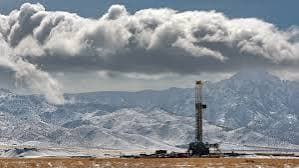
Earlier this year, a drill bit north of Cape Station in southwest Utah reached 11,200 feet. At the bottom, a Fervo Energy observation well measured 555 degrees Fahrenheit. It was the hottest well in the company’s history.
That heat does not care whether the sun is shining. It does not wait for the wind. It is there at 2 a.m. in January and at 4 p.m. in August.
That is why the biggest buyers of electricity in the country are lining up for it.
On September 1, Fervo and Google signed a 396-megawatt power purchase agreement for geothermal power from Cape Station. Fervo called it the world’s largest enhanced geothermal agreement to date. Fervo will also offer Google an option to buy roughly 600 more megawatts, bringing the potential total near 1 gigawatt.
Now look at the dates.
The power is expected to come online in 2028. The option runs to June 2030. And when the agreement was signed, Cape Station’s first generating unit had not yet delivered power to the grid. Fervo was targeting the fourth quarter of 2026.
Utah’s firm clean power is being sold years before it flows.
Four decades of heat This summer, I wrote about Beaver County twice.
In July, I wrote about the June shutoffs that cut power near Milford to keep lines from starting fires. In August, I wrote about the floods that tore through Beaver after the Cottonwood Fire.
Beneath that same county sits one of Utah’s oldest energy stories.
Since 1984, the Blundell plant has been producing electricity from geothermal steam at Roosevelt Hot Springs near Milford. Its original unit is rated at 26 megawatts gross, and a later binary unit added 11 megawatts.
Geothermal power in Utah is not an experiment. It has been running for four decades.
What is new is the scale, and the scale comes from an unlikely place.
The shale playbook goes underground Fervo builds its wells with tools borrowed from the oil and gas fields.
It drills down, then turns and runs horizontally through hot granite. It uses diamond drill bits built for shale basins and mud coolers to keep equipment working in the heat. It threads fiber optic cable into the wells to watch flow and temperature in real time.
The learning curve has been steep. At Cape Station, Fervo drilled its fastest early well in just 21 days. Across its first four horizontal wells there, drilling costs fell from $9.4 million to $4.8 million per well.
The company has now moved into Phase II. Two rigs are drilling wells with laterals of 7,500 feet. Fervo reports that all long-lead equipment for that phase has been secured, backed by a turbine supply agreement covering up to 1,750 megawatts of capacity.
That last point matters as much as the heat. Fervo did not just find a resource. It locked down the rigs, turbines and steel it needs to develop it.
Sold before it exists Cape Station is being built in phases. Phase I is about 100 megawatts across three 33-megawatt units. Phase II is planned to add about 400 megawatts by 2028.
The buyers came early.
In 2022, Fervo contracted 53 megawatts from Cape Station to California community choice aggregators. In December 2024, Southern California Edison signed two 15-year agreements totaling 320 megawatts.
California’s buying did not happen by accident. In 2021, the California Public Utilities Commission required utilities to procure 1,000 megawatts of zero-emission power that does not depend on weather or batteries. That requirement helped drive demand for geothermal.
By June 2026, Fervo reported 658 megawatts of contracted power purchase agreements. In March, it signed a framework agreement with Google for up to 3 gigawatts of geothermal capacity through 2033. Then came the September 1 deal.
Those contracts did more than reserve power. They helped make the project financeable. Fervo closed $421.4 million in non-recourse project financing for Cape Station Phase I, which it described as the first of its kind for an enhanced geothermal project.
I do not see a villain here. Long-term buyers with strong balance sheets are what put rigs on the pad. Google’s commitment helps get wells in the ground.
But it shows how this market works. Firm clean power goes first to whoever can commit early, for long terms, at scale.
Picture the buyer at the back of the line Picture a manufacturer in Cedar City.
It runs a continuous process, three shifts, seven days a week. Its customers want lower-carbon products. Its board wants a stable power price for the next decade. It needs 20 megawatts, around the clock.
The owner reads about Cape Station and makes a call. The early output is already spoken for. The buyers ahead of it signed years ago, for 15 years at a time, with balance sheets measured in the billions.
This is an imagined company, not a real one. But the position is real for many mid-sized loads in Utah.
That is the market failure. The resources that match a 24-hour load take years to develop. The buyers with the capital to commit years ahead claim the first output. A county hospital, a food processor or a rural industrial park rarely has the balance sheet or the timeline to compete for those first slots.
Utah’s leaders have recognized the broader need. In October 2024, Governor Spencer Cox launched Operation Gigawatt, aiming to double the state’s power production over the next 10 years, with policies to enable clean, reliable sources like nuclear and geothermal.
Policy can open the door. It does not decide who walks through it first.
What the contract does and does not prove I want to be careful about what the September 1 agreement means.
Google has not committed to building a Utah data center. The power is intended for a potential data center, and final plans remain subject to engineering feasibility, regulatory approvals and commercial conditions. The announcement did not disclose a price.
I also will not claim that Cape Station will hit every date. Enhanced geothermal at this scale is new. Fervo has done serious work in the ground, but the 2028 date still has to be delivered.
There is one more distinction every buyer should understand. A power purchase agreement and a wire to your meter are not the same thing. Contracted power can reach a load through a utility, a dedicated line or a financial arrangement that matches purchases with consumption. Each path carries different costs, approvals and risks.
I would want that path written down before treating any contract as a supply plan.
Match the resource to the load The right firm-power plan starts with the load, not the technology.
How much power does the facility need every hour of the year? How much must be firm, and how much can flex? How fast does the load grow, and in what steps?
Then compare the options against that profile.
Geothermal fits a flat, around-the-clock load, but the first output from new projects is being contracted years ahead. Solar paired with storage can cover many hours and can often be built faster, but it needs careful sizing for winter and multi-day weather. Natural gas engines, which I covered in Gigawatts in the Desert, can arrive quickly but depend on fuel contracts and permits. Nuclear offers firm power over a longer development horizon.
Most large loads will end up with a portfolio. The real question is which piece carries the hours that cannot fail.
Six questions before you sign Before a facility commits to a firm-power strategy, I want six answers:
What is the hourly load profile, and how much of it must be firm?
Which firm resources can realistically serve the site on the required timeline?
How much of that resource’s output is already contracted, and by whom?
How will contracted power physically or financially reach the load?
What covers the load if a new resource comes online late?
What contract length and price exposure can the business carry?
The heat beneath Utah has been making electricity since 1984. Its next gigawatt is being claimed before it is built.
The buyers who plan early are getting in line. The ones who wait will find the line already formed.
Get a firm-power options review If you run a data center, factory, hospital or industrial campus with an around-the-clock load, this is the conversation to have before the next contracts are signed.
Send Ber Wilson your hourly or monthly load data, phasing plan, site location and sustainability goals. Include any utility correspondence you have.
We will compare utility service, on-site generation, contracted clean supply and storage against your actual load. You will see which options fit your timeline, what each one depends on and where each carries risk. Where the work calls for power-contract or market specialists, we will bring them in.
The review does not secure supply. It shows you which options are real for your load and what it takes to reach them.